Inside the Beltline vs North Raleigh: A Budget Buyer’s Guide
June 25, 2026
June 25, 2026
If you’re trying to buy in Raleigh without stretching your budget too far, the choice between Inside the Beltline and North Raleigh can feel tough fast. Both areas offer real advantages, but they tend to reward different priorities, especially if you care about monthly affordability, maintenance risk, commute patterns, and how much space you get for your money. The good news is that the decision becomes much clearer once you compare the housing stock, price ranges, and day-to-day lifestyle side by side. Let’s dive in.
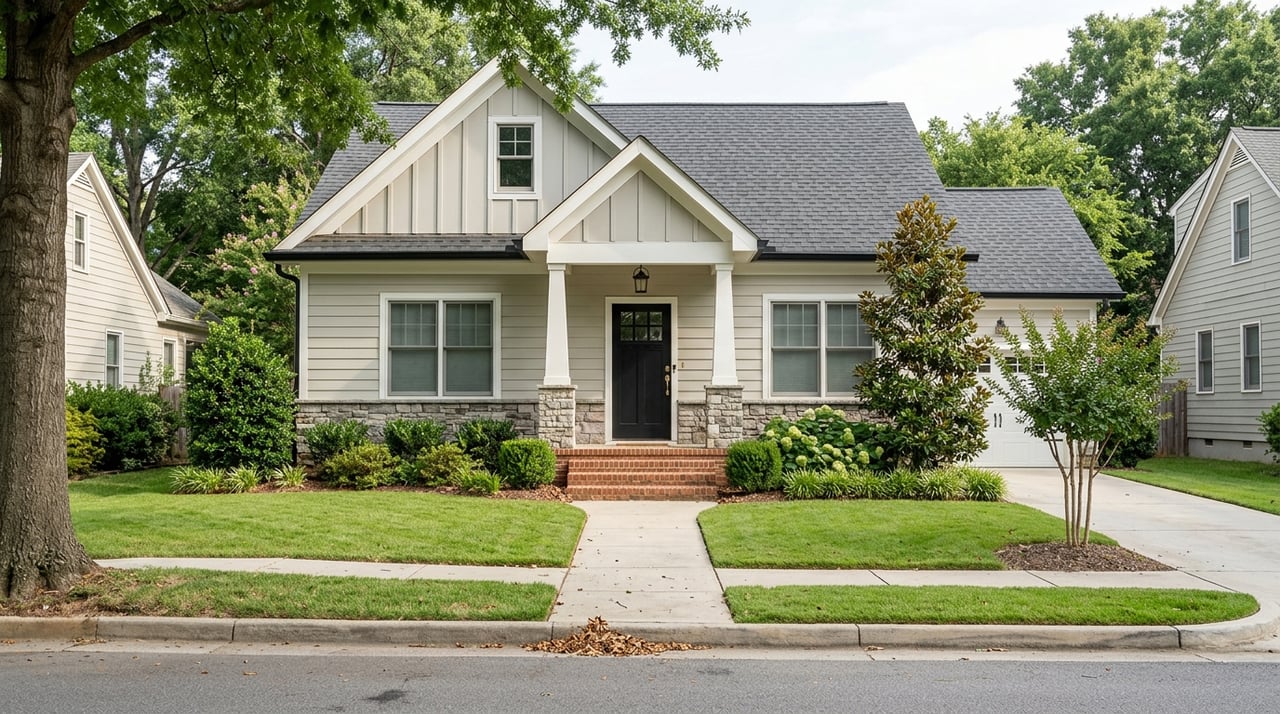
Inside the Beltline, often called ITB, generally refers to Raleigh’s older core inside I-440. City planning materials describe this area as largely shaped by pre-1960s development patterns, with many established single-family neighborhoods and infill activity in previously built areas.
North Raleigh developed in a different way. Raleigh’s growth pattern shows a later suburban wave moving north in the late 1960s, helping shape areas such as North Hills and Crabtree Valley. That history still shows up today in the form of a broader suburban footprint, more layered housing options, and more room for newer development.
For a budget buyer, that split matters. ITB is often more about location scarcity and access to the core, while North Raleigh is often more about flexibility, space, and a wider range of price points.
Inside the Beltline includes some of Raleigh’s oldest housing stock. Areas such as Historic Oakwood are known for Victorian and early 20th-century homes, while Boylan Heights is recognized for modest bungalows, smaller lots, shallow setbacks, and a tighter street grid.
You’ll also find a stronger mix of condos, apartments, and historic-district housing closer to downtown. That creates some entry points for buyers who want a central location, but those opportunities often come with tradeoffs in square footage, condition, or property type.
If you are drawn to older homes, walkable streets, and a close-in address, ITB can be compelling. But if you are shopping with a strict budget, it helps to expect compromise and to plan carefully for repairs, updates, or smaller living spaces.
North Raleigh tends to offer a more suburban housing mix. Current market data in the research report show about 487 homes for sale and a median listing price around $477,499, with options ranging from mid-century neighborhoods to newer attached-home communities.
That variety can be important if you want more ways to stay within budget. Some neighborhoods reflect earlier suburban development from the 1960s, while newer communities near I-540 offer townhomes, condos, and recently built homes that may appeal to buyers who want lower-maintenance living.
In practical terms, North Raleigh often gives you more chances to compare home styles, age, and price bands in one broad area. For many budget-conscious buyers, that means a better shot at balancing cost, space, and upkeep.
The citywide context is useful. Redfin reported Raleigh’s median sale price at $424,781 in April 2026, but the comparison areas in the research report show that pricing can shift quickly depending on where you focus.
Downtown Raleigh had a median listing price of $525,000. Five Points was around $899,000, and North Hills was about $669,500. North Raleigh overall sat around $477,499, which is still above the citywide sale median but noticeably below some of the premium pockets inside the Beltline.
The zip code view makes the contrast even sharper. Realtor.com data in the report show 27608 and 27607 near $1,000,000, 27609 around $691,250, and 27601 around $589,000, while North Raleigh-oriented zip codes such as 27610, 27616, and 27604 were roughly $350,000 to $378,000.
That does not mean every North Raleigh area is inexpensive. Zip codes such as 27615, 27614, and 27612 can trend higher. Still, the broader pattern suggests North Raleigh offers more entry points for buyers trying to stay disciplined on price.
For many budget buyers, this is the real question. Not just, “What is the list price?” but “What does that number actually get me?”
Inside the Beltline, a lower entry price may still come with an older home, a smaller lot, less square footage, or a condo instead of a detached house. In some cases, that may be worth it if being close to downtown, restaurants, and established neighborhoods is your top priority.
In North Raleigh, your budget may stretch toward a detached home, a larger layout, or newer low-maintenance construction. The research report notes this as an inference from market medians and housing mix, not a guarantee for every listing, but it is a useful framework when you start comparing options.
Budget is only part of the picture. Where you live also shapes how you spend your time, how often you drive, and what daily convenience feels like.
ITB generally has the edge when it comes to density and spontaneous convenience. Downtown Raleigh Alliance reports more than 100 lunch restaurants and more than 100 public art pieces downtown, while Village District includes more than 100 shops, cafes, restaurants, and services across six city blocks.
Historic Oakwood is described as a neighborhood you can enjoy by driving or walking, and Boylan Heights has sidewalks and a compact street grid that supports walking. If you want a setting where errands, dining, and local experiences can feel more connected, ITB often delivers that more naturally.
North Raleigh is also rich in amenities, but the pattern is different. Instead of one continuous urban grid, convenience is often organized around distinct pockets and districts.
Visit Raleigh describes Midtown Raleigh as four shopping, entertainment, and dining districts within a short drive, each walkable in its own area. North Hills alone has more than 130 local shops, restaurants, bars, spas, a theater, and an outdoor live music venue, while Lafayette Village adds another cluster of shopping and dining near I-540 and Falls of Neuse.
If you do not mind driving between errands or social plans, North Raleigh can still feel very convenient. It just tends to function more as a collection of nodes than one central walkable fabric.
A lower home price does not always mean a better fit if your commute adds stress or time every day. That is why this comparison should include how each area connects you to the places you go most.
ITB often works well for shorter trips into downtown or other central parts of Raleigh. That said, NCDOT identifies the I-440 Beltline segment in the study area as a bottleneck, with congestion projected to worsen through 2035.
North Raleigh usually leans more heavily on highway-based commuting. The City of Raleigh describes Six Forks Road as a major corridor connecting I-440 and I-540 through central and north Raleigh, and NCDOT has reactivated ramp meters at four I-540 interchanges in North Raleigh during the morning commute.
If your routine depends on access to outer-loop routes, North Raleigh may fit better. If you want to stay closer to the city core, ITB may reduce the need for longer highway drives.
Budget buyers usually need to think beyond the purchase price. You also want to consider maintenance, upgrade needs, and the kind of value story each area may offer over time.
Raleigh describes infill as development in previously built areas that should accommodate compatible growth while reinforcing neighborhood character. In ITB, that can support a value story built around land scarcity, established locations, and renovation potential.
For the right buyer, that may create strong long-term appeal. But near-term costs can be higher if the home needs updates, repairs, or system replacements, which is why financially conservative buyers should evaluate the full cost of ownership, not just the mortgage payment.
North Raleigh’s value tends to look different. The area has more active supply, multiple price bands, and visible new construction, including low-maintenance townhomes and condos near I-540.
That can make budgeting feel more predictable, especially if you want fewer immediate repair projects. The research report suggests North Raleigh may offer more house per dollar, while ITB may offer stronger scarcity-driven upside in some cases, but neither outcome is guaranteed and each purchase still depends on the specific home and micro-location.
If your goal is to keep your purchase disciplined and reduce surprises, North Raleigh will often be the easier starting point. You are more likely to find a broader spread of price points, newer housing options, and homes that offer more space for the money.
If your top priority is a central address, walkability, and access to Raleigh’s older core, ITB may still be worth pursuing. You just need to be realistic about the tradeoffs, which often include smaller footprints, older systems, or a higher price for the location alone.
A smart way to compare the two is to rank your top three priorities before you tour homes:
When you are clear on those factors, the right area usually becomes much easier to spot.
If you want help weighing central-location appeal against budget discipline, Crumpler Realty Group can help you compare Raleigh options with a steady, financially grounded approach.

Together we have purchased, updated, renovated, and sold multiple homes in Apex, Holly Springs, and now Cary. We have helped first time home buyers, growing families, empty nesters downsizing, investors, and buyers looking for their dream vacation home in the mountains or coastline of North Carolina. Each client and move are unique, different, and usually has many moving parts. Through our personal and professional experience, we can help you with your next move.
If you are thinking of moving to the Triangle area like so many others, we have a vast network of real estate professionals across the country that can assist you with the preparation and sale of your current home. Contact us today!
Stay up to date on the latest real estate trends.
We pride ourselves in providing personalized solutions that bring our clients closer to their dream properties and enhance their long-term wealth.