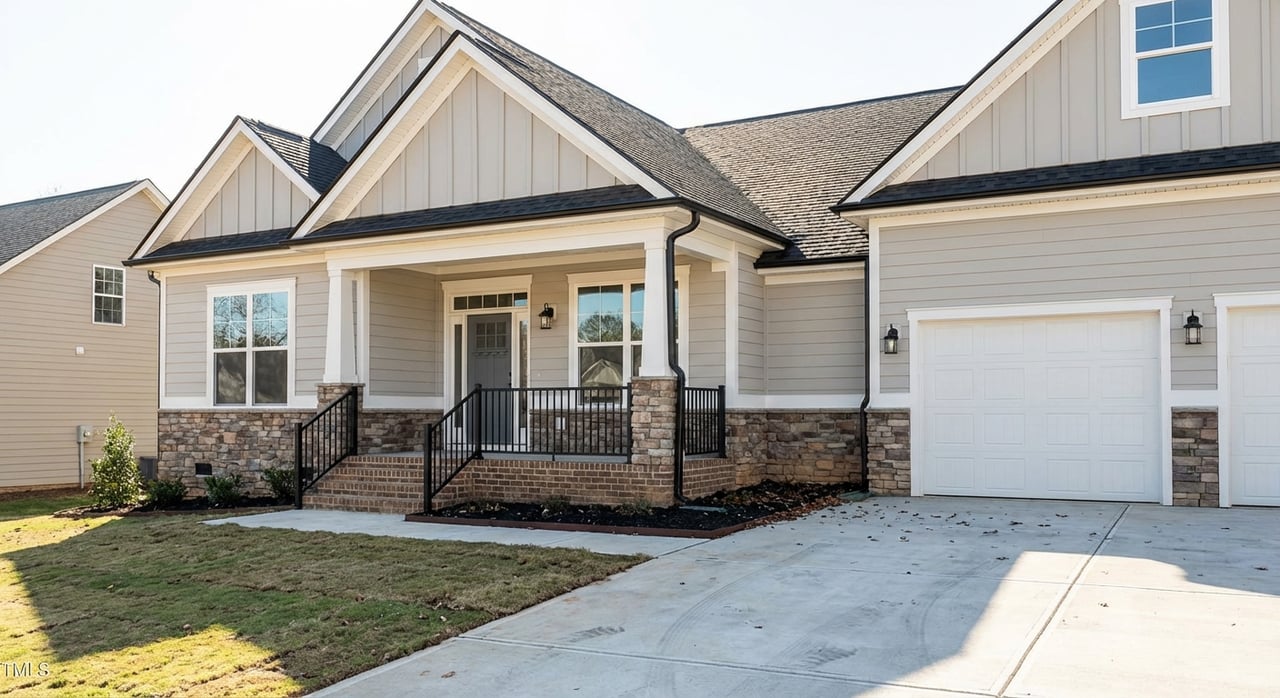
Smart Holly Springs New Construction Tips for Your Budget
February 26, 2026
February 26, 2026
You see a beautiful model home, but the number on the sign is not your final price. If you are planning a new build in Holly Springs, it pays to know exactly what adds to your bottom line before you fall in love with a floor plan. You want clarity, a steady budget, and no surprises at closing. This guide breaks down the real costs in plain English, with local fees and a conservative workflow you can use to make a debt‑smart plan. Let’s dive in.
In Holly Springs, base prices already sit in the mid hundreds. Recent market snapshots show home values and medians commonly in the 570k to 635k range depending on source and method. When you start layering on a lot premium, design choices, town tap fees, HOA dues, taxes and move‑in items, your total can shift fast. A clear budget up front helps you choose the right lot and finishes without blowing past your comfort zone.
“Base price” means the plan on a standard lot with a standard finish package. Some national builders include many finishes in that base number. For example, Lennar often promotes an “Everything’s Included” style package that can bundle counters, appliances and smart features into the base price. Always ask for the written inclusions schedule and do not assume the model home’s finishes are standard.
A lot premium is an extra charge for a more desirable homesite, such as a cul‑de‑sac, extra depth, private view, or corner location. Builders typically list this as a separate line in the contract. Practical ranges vary, but premiums of several thousand to tens of thousands of dollars are common in planned communities. Budget for it unless you are set on a standard interior lot.
Upgrades are where budgets move the most. Cosmetic selections include flooring, tile, lighting and fixtures. Structural options include things like a screened porch, third garage bay, added bathroom or a bump‑out. Structural choices usually cost more than cosmetics and can be harder to add later.
Builders vary on appliance packages. Some include a full stainless suite, while others exclude the refrigerator and washer/dryer. Window coverings also are often not included. If excluded, plan 2k to 6k for a basic to mid‑range appliance set and more for premium built‑ins. Confirm in writing which items are standard and which are options.
Many builders include basic front‑yard sod and minimal planting. Backyard landscaping, irrigation, fences, patios or decks are commonly extra. A modest post‑closing yard package often runs several thousand dollars. Larger projects like privacy fencing or paver patios can easily exceed 10k. Ask what is included in front and back, and whether irrigation is part of the standard features.
System development and tap fees are real, required costs that support water and sewer infrastructure. In Holly Springs, the FY25 fee workbook lists, for a typical 3/4 inch residential meter, a water system development fee around 6,162 dollars and a sewer system development fee around 5,538 dollars. Exact amounts depend on meter size and project, and the town may collect them at permitting stages. Review the official fee workbook and confirm what applies to your plan before you sign.
HOA dues vary by product type and amenities. In the area, townhomes and amenity‑rich neighborhoods often run higher than minimal HOA single‑family communities. Expect a rough range from about 50 to 300 dollars per month depending on features. Ask for the HOA budget, reserves, transfer fees and any planned special assessments. Verify what dues cover, like landscaping, amenities or exterior maintenance.
Holly Springs’ adopted municipal property tax rate is 34.35 cents per 100 dollars of assessed value. Your total property tax bill also includes county and school rates, which often bring the combined effective rate into the 0.7 to 0.9 percent range. Use that combined estimate to run annual and monthly tax numbers and verify with the Wake County tax office for your specific home. Get quotes for homeowner’s insurance early as well, since lenders escrow taxes and insurance into your monthly payment.
Do not forget the small but necessary line items. Closing costs, prepaid interest, initial HOA deposits, window coverings, mailbox setup, utility activation and any landscaping beyond the builder minimum can add up. Builders sometimes offer closing‑cost or design‑center credits. Get incentives in writing and confirm if they require a preferred lender.
Sometimes yes. If the builder rolls upgrades into your purchase contract, they typically become part of the loan amount, subject to lender rules and appraisal. Lot premiums work the same way when included in the contract price. If you choose upgrades after the appraisal or you buy from a third‑party vendor outside the contract, you may need cash at closing.
If you are building from dirt or doing a semi‑custom, ask about construction‑to‑permanent loans or two‑close construction loans. These allow draws during construction and then convert to a standard mortgage at completion. If you are buying a completed or quick‑move‑in home, a conventional purchase mortgage is more common. Clarify down payment, draw inspections and timing with your lender.
Appraisers lean on comparable sales. Highly personal or over‑customized upgrades may not return equal value in an appraisal, which can cap your loan amount. Keep a conservative mindset. Prioritize items that are commonly valued in your community and avoid over‑spending on features that are hard to compare.
Builders often offer rate buydowns, closing credits or design‑center credits when you use their preferred lender. These can be useful, but always compare the full economics. Ask for itemized credits and a side‑by‑side loan estimate from an independent lender. Choose the option with the best total cost of borrowing, not just the biggest headline credit.
Use this simple, Ramsey‑minded process to lock in a budget before you pick a lot or finalize finishes.
Start with the base price for your floor plan and phase. Get the written inclusions schedule so you know what is standard.
Add the exact lot premium for the homesite you want. Treat it like part of the purchase price and estimate the monthly payment impact.
Pre‑select only essential design‑center items. Separate structural must‑haves from nice‑to‑have cosmetics. Ask which upgrades can be financed in the mortgage and which require cash. As a starting point, plan 10 to 20 percent of the base price for upgrades if you want a more personalized home, or at least 10k to 30k in this price band for common selections.
Add required town fees. For a standard 3/4 inch meter in Holly Springs, plan roughly 6,162 dollars for water and 5,538 dollars for sewer as one‑time system development fees, then confirm your exact meter size and any irrigation fees. Add estimated property taxes using the town rate plus county and school portions, and include your monthly HOA dues.
Add one‑time move‑in needs like window coverings, refrigerator and washer/dryer if not included, mailbox, fencing, and backyard landscaping. Hold a 10 to 15 percent contingency for last‑minute add‑ons, cost escalations or price changes.
Your numbers will differ. The goal is to see your all‑in cost and monthly payment before you commit to a lot or a big design center appointment.
When you break new‑construction pricing into clear pieces, you can make calm, confident choices that fit your life and your budget. Base price is a starting point. Your lot, design decisions, town fees, HOA dues and taxes complete the picture. If you want a steady, financial‑first partner to help you compare builders, validate fees and protect your bottom line from contract to closing, reach out to the team at Crumpler Realty Group.

Together we have purchased, updated, renovated, and sold multiple homes in Apex, Holly Springs, and now Cary. We have helped first time home buyers, growing families, empty nesters downsizing, investors, and buyers looking for their dream vacation home in the mountains or coastline of North Carolina. Each client and move are unique, different, and usually has many moving parts. Through our personal and professional experience, we can help you with your next move.
If you are thinking of moving to the Triangle area like so many others, we have a vast network of real estate professionals across the country that can assist you with the preparation and sale of your current home. Contact us today!
Stay up to date on the latest real estate trends.
We pride ourselves in providing personalized solutions that bring our clients closer to their dream properties and enhance their long-term wealth.